
NEWS

BDS AT UKSG
The 47th Annual UKSG Conference and Exhibition took place between the 8th and 10th April at Glasgow’s SEC. Director of Academic Library Operations, Heather Sherman and Sarah Armitage, Director of Library Sales, represented BDS at the three-day event.

“The UKSG Conference provides a wonderful opportunity to talk to many industry colleagues about BDS and UniCat,” says Heather Sherman. “There’s a buzz around BDS’s new UniCat service. The conference is the ideal place to bring delegates up to date about UniCat and what it is achieving for academic libraries.”
The UKSG Conference is a major event in the scholarly communications calendar. Attracting delegates from around the world, the conference combines high-quality plenary presentations, lightning talks, workshops and breakout sessions with entertaining social events and a trade exhibition.
Hot Topics
“I always find the presentations and breakout sessions really interesting,” continues Heather. “They give me an insight into the day to day challenges that academic libraries are dealing with. They also provide me with ideas about how BDS can help.”
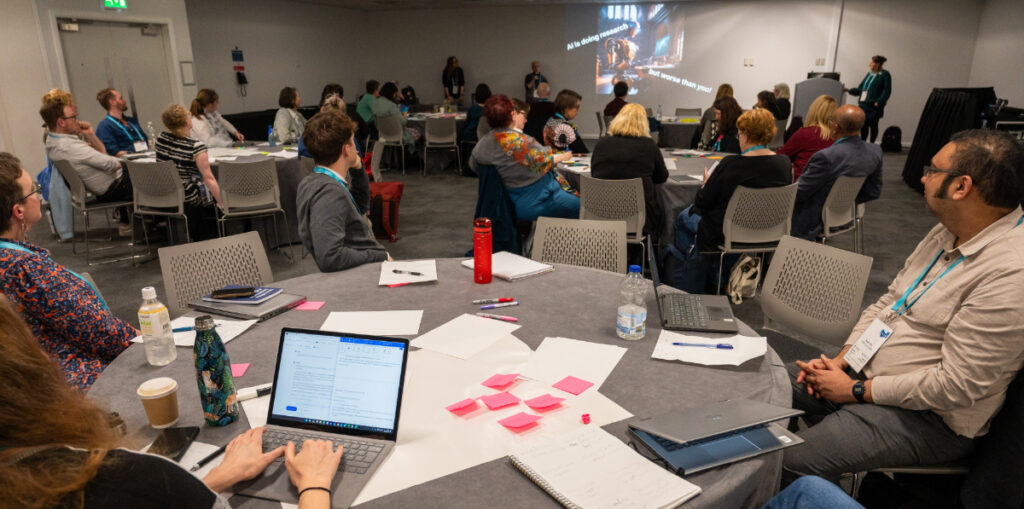
This year AI was high on the Conference agenda. Heather attended, “Demystifying AI: (Data-centric) Uses and Limits for Library Collections” given by Siobhan Haime of the Open Library of Humanities.
The session explained the technological underpinnings of AI. It also addressed concerns and long-term requirements around ethical and practical usage. This included data preparation and cleaning, data ownership, and the value of data generated by libraries. It also discussed making collections data AI-ready, providing examples of AI capabilities and applications beyond chatbots.
Open Access
The rapidly evolving opportunities and demands around Open Access publishing was the topic of two sessions.
“How to manage a successful Open Access service in addition to the demands of a primary role” was given by Grace O’Brien and Ruth O’Hara of Maynooth University, and “Making it possible and making it easy: Research Culture and Open Access Monographs” was given by Tom Morley of Lancaster University.
“Metadata for Open Access titles is part of the UniCat service to academic libraries. We follow the latest developments around the management of OA collections closely,” says Heather. “It is clear OA has shifted the workload librarians manage and is continuing to do so. Obviously, quality metadata for OA titles delivered efficiently plays an invaluable role in helping collection management and discoverability.”
Back to Physical
Legacy issues with physical books, including consistent classification, logical stock sequencing and metadata optimisation was part of a wide-ranging presentation on the University of Southampton’s £2million project in relation to the print book collection at Hartley Library.
Jonathan Chipp and James Howells of the University discussed the overall aims, data handling, data-driven decision-making, workflows, engagement and consultation strategies associated with this project.
“This presentation touched on so many areas where BDS and UniCat have a role to play,” says Heather. “For example, major projects require time and resources liberated by the automated workflows and the ingestion of trusted metadata for core items. This is at the heart of the UniCat service.”
The Future
The future of the academic library, its survival or demise, was the topic of presentation for academic libraries writer and analyst John Cox.
“The position and prospects of academic libraries: a SWOT analysis and strategy framework,” identified key factors influencing academic library status and positioning.
The session aimed to enable attendees to leverage their strengths, address weaknesses, take the opportunities presented to them and mitigate the significant threats they confront.
“As always, the UKSG Conference was stimulating, informative and inspiring,” concludes Heather. “It enabled me to envision the position of UniCat more clearly in the world of academic libraries. This will be fed into future developments of a product I believe to be essential to the health and well-being of the academic library in the UK and Ireland.”
To find out more about UKSG visit: Welcome to UKSG | UKSG